SENSORIUM invited attendees to play with their senses – namely sound, taste, and touch – through a place-based soundscape, a living, tactile dressing room, and a lovingly crafted food experience rooted in traditional practices.
Alexis Harrison • Jazz:Community

An oversaturated photo of a crowd cheering, mostly bright white with multi colors framing the top of the image.
Jazz:Community is a sonic expression of being in community: as in moving through neighborhood streets, as in coming together because of love, determination, knowledge, as in knowing the boundaries that tell us where we are.
The project is a process that seeks to answer: What does the experience of being in/with community sound like and what does it make us feel?
The project is a meditation on how our worlds all come together. As a gathering, Jazz:Community creates the container for deep inquiry on the experience of community.
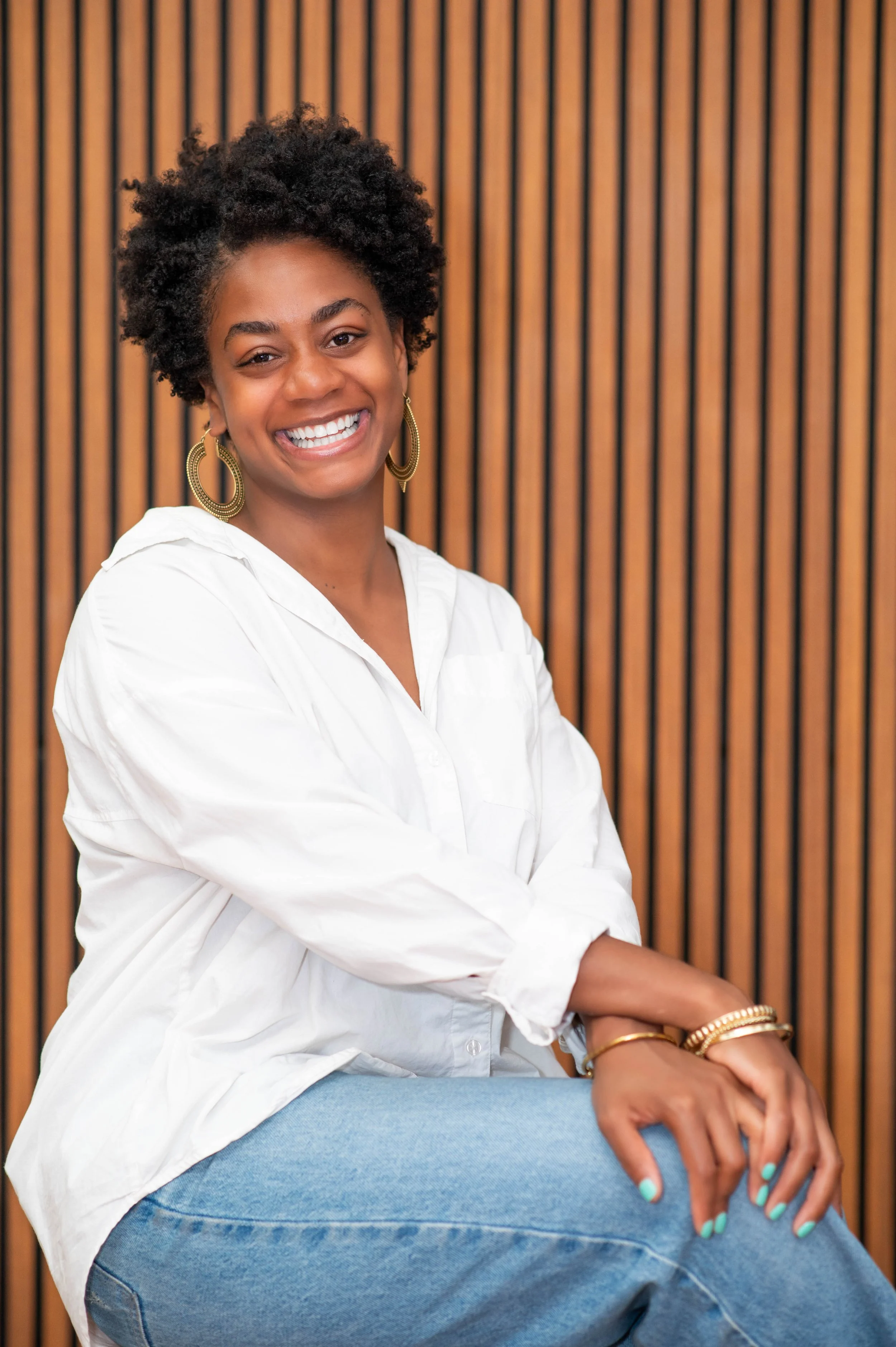
A Black woman with natural hair wearing gold hoop earrings, a white shirt, and blue jeans smiling big against a wood panel background.
Alexis Harrison is an interdisciplinary social practitioner whose work starts with deep self reflection through her connection with nature. In her work, she integrates oral histories to express the poetics of life. Her work prioritizes co-creation as a means to build community.
Taking New Shapes: Embodying Liberatory Futures in the Present • Haileigh Nelson
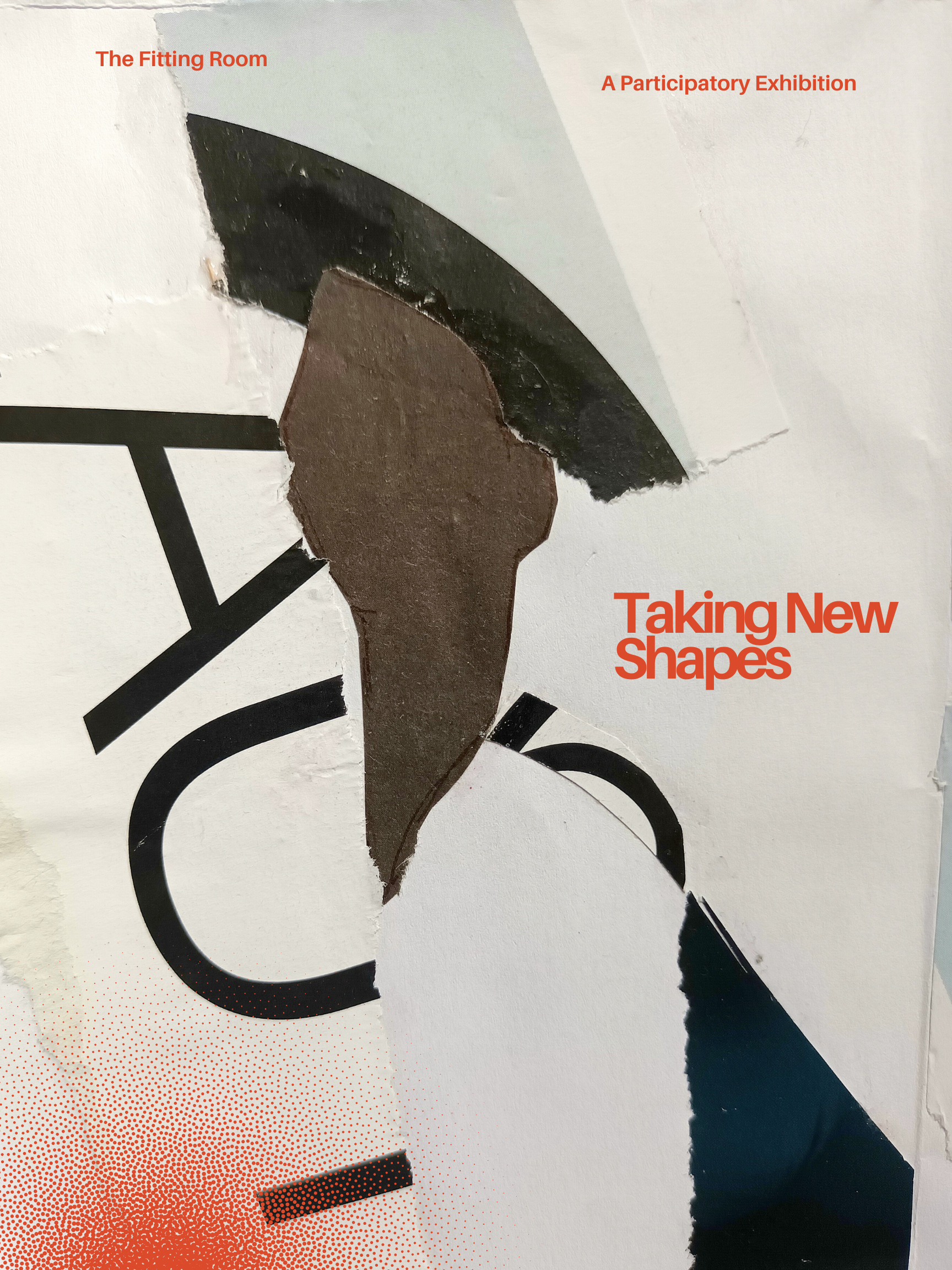
A poster or exhibition cover with a strong collage-like, modernist design. At the top, small red text reads “The Fitting Room” on the left and “A Participatory Exhibition” on the right. The main title, “Taking New Shapes,” is placed toward the lower-right area in bold red lettering, giving the composition a vivid focal point. The background is mostly pale and textured, almost like torn paper or a weathered wall. Across it, there are overlapping abstract forms in black, brown, cream, and dark blue. Some shapes look sharply cut or ripped, while others curve smoothly, creating a feeling of layered fragments being assembled into a new visual order. A large, dark, arc-like shape dominates the upper portion, while a jagged brown form cuts down through the center, adding tension and movement. Black geometric lines and partial circular shapes peek through beneath, suggesting hidden structure under the torn layers.
Taking New Shapes: Embodying Liberatory Futures in the Present is a participatory exhibition exploring Ancestral Threadwork, an emerging framework that weaves together creativity, embodiment, and community as pathways toward care, relation, and freedom.
The installation functions as a living studio in which garments operate as portals to memory and possibility. Audiences are invited to step into the work, try on and rehearse gestures, postures, and ways of being, and reflect on the liberatory futures they imagine.
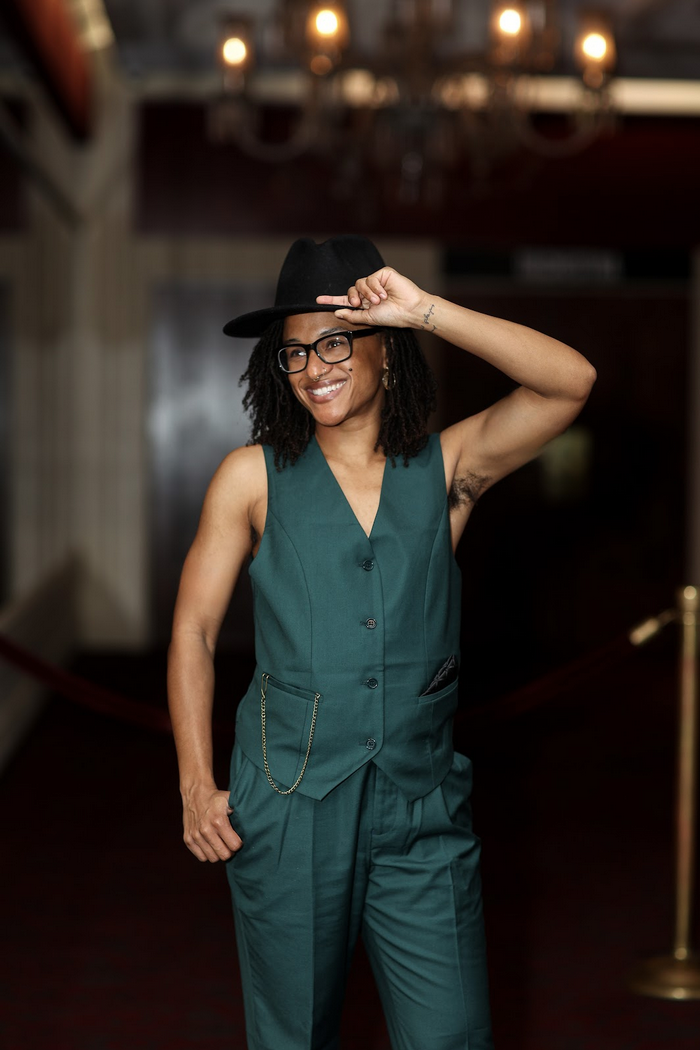
Associated Artist, Haileigh Nelson, pictured in the foreground of the Apollo Theater foyer wearing a forest green suit (pants and vest) and black fedora hat. Haileigh’s hair is micro loc’d and styled down underneath their hat. Haileigh is also wearing green-framed glasses and is smiling showing their teeth. Haileigh’s vest has a gold pocket watch chain in the right pocket and a black satin pocket square in the left. Haileigh has their right thumb placed in their pocket and left hand holding onto the black fedora hat they are wearing—exposing their natural armpit hair.
Haileigh Nelson (They|Them) operates from the conviction that social change is not found in policy alone, but in the rhythmic act of mending—a mindful, purposeful weaving of community, creativity, and embodiment. Their artistic practice sits at this sacred intersection where personal and social transformation meet, rooted in the belief that the body is the most powerful creative source for realizing collective liberation.
Gursha: Communal Eating Lovers • Mai’yah Kau
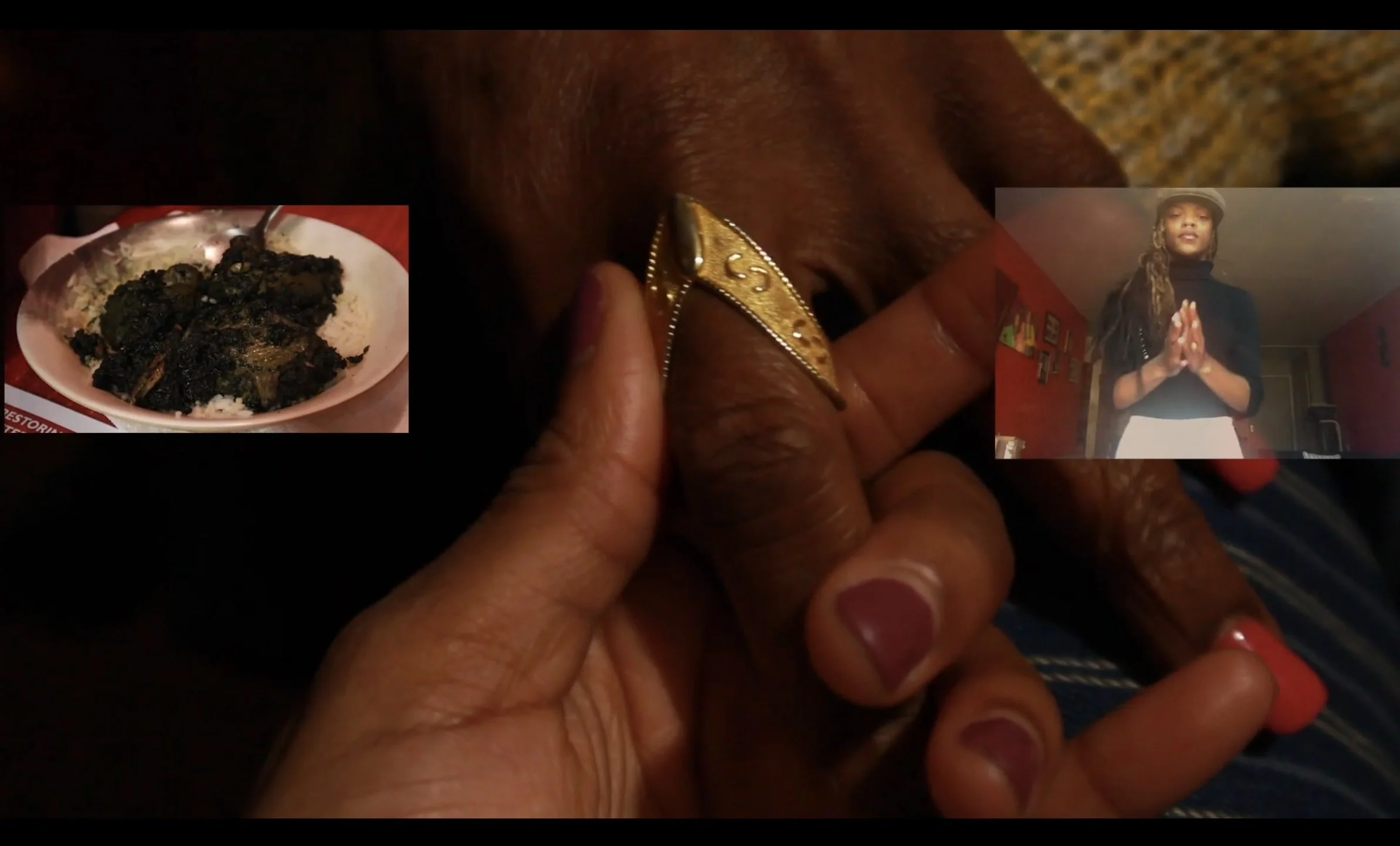
Still from Dancing with Wala (2020) by Artist.
Gursha means “mouthful.” In Ethiopian practice, placing food into another person’s mouth by hand is a gesture of love, welcome, and trust. This gathering bridges that named practice with a Liberian tradition of hospitality and care, eating from a shared bowl and feeding one another by hand, using rice bread as the offering. Together these traditions build a small ceremony, drawing on afro diasporic food traditions to hold space for intimacy, care, and cultural exchange. We move gently from stillness toward release and joy, honoring how intimacy and indigenous practice expand through queer relationships and lineages.
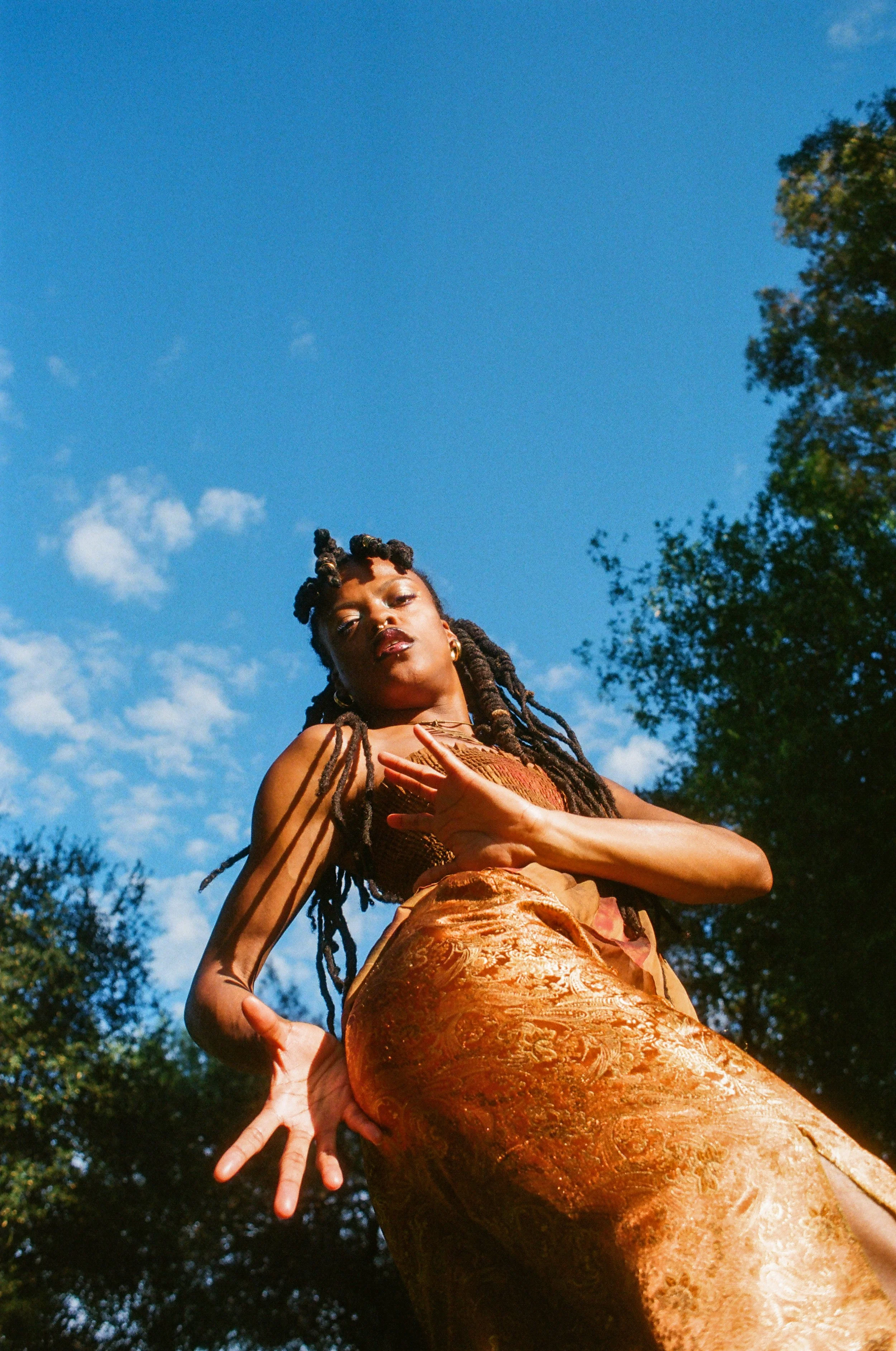
A low-angle outdoor portrait of Mai’yah, a brown-skinned femme with long dark brown locs, captured against a wide blue sky and treetops. They wear gold pants and a flowing brown- and reddish-toned strapless top that catches the light, with one hand extended toward the camera and the other resting near their hip.
Photo by A Klass @transnormativity (2025)
Mai’yah Kau, also known as Maima, The Water Spirit, is a queer Liberian diasporic artist with roots in Park Hill, Staten Island and based in Brooklyn. Their work weaves together identity, heritage, and spirituality. Kau blends traditional West African dance with contemporary queer performance to create participatory rituals and dances.